
DaVinciAT Robotics in Architecture Research Center
DaVinciAT Robotics Research Center Scope
Alfaisal's DaVinciAT, R&D Research Center, shines in Cyber-Physical Systems and Non-Humanoid Social Robotics, merging robotics, social robotics, AI, intelligent systems in architecture, interiors, and design with engineering and creativity. It leads breakthroughs in engineering and intelligent systems through cutting-edge robotic architecture, intelligent environments and applications, smart devices, and adaptive materials. DaVinciAT Robotics has established new standards in intelligent systems and advanced manufacturing. DaVinciAT Robotics in Architecture Research Center comprises four state-of-the-art labs: a. Morph for advanced digital fabrication and design workshop, b. Edge: Cyber-Physical Systems & Non-Humanoid Social Robotics Synergy Studio, c. RoboTek: Robotics Fabrication Lab, and d. iDNA: the intelligent Design and Art (iDNA) research lab.
DaVinciAT Robotics Research Areas
All of the following areas of the built environment, referred to as the “built environment,” encompass scales beyond the humanoid scale, specifically the mesoscale and macroscale, such as furniture scale and larger.
- Adaptive human-space-robot interactive systems
- Non-humanoid social robotics in architecture
- Meso-/Macro- Scale Cyber-Physical integration with edge intelligence
- Agentic HART Spatial Environments
- Human-AI-Robot Teaming for human-spatial coexistence and coevolution
DaVinciAT Robotics Purpose
Advancing architectural and spatial robotics through research, innovation, design, prototyping, and education—cultivating novel practices in cyber-physical environments, intelligent adaptive systems, and non-humanoid social robotics for the built environment and industry.
DaVinciAT Robotics Key Achievements
GRANTS:
The Research, Development and Innovation Authority (RDIA) - Research Grant - SAR 3,766,000
PATENTS:
Tarek Mokhtar. Autonomous and user-input reconfigurable proning bed and method for reconfiguring proning bed in the treatment of acute respiratory distress syndrome (ARDS), Patent No. US11273087B1, U.S. Patent and Trademark Office, USA.
BOOKS:
Mokhtar and Manganelli. Coexistence and Coevolution of Humans and Intelligent, Adaptive Environment, Taylor & Francis Press – February 2026
RESEARCH:
Journal Papers, Patents, Conference Papers, and Books
PHYSICAL PROTOTYPES:
iHE, iWEE, iLounge (wip), LISA, the iCabinet (wip), and more
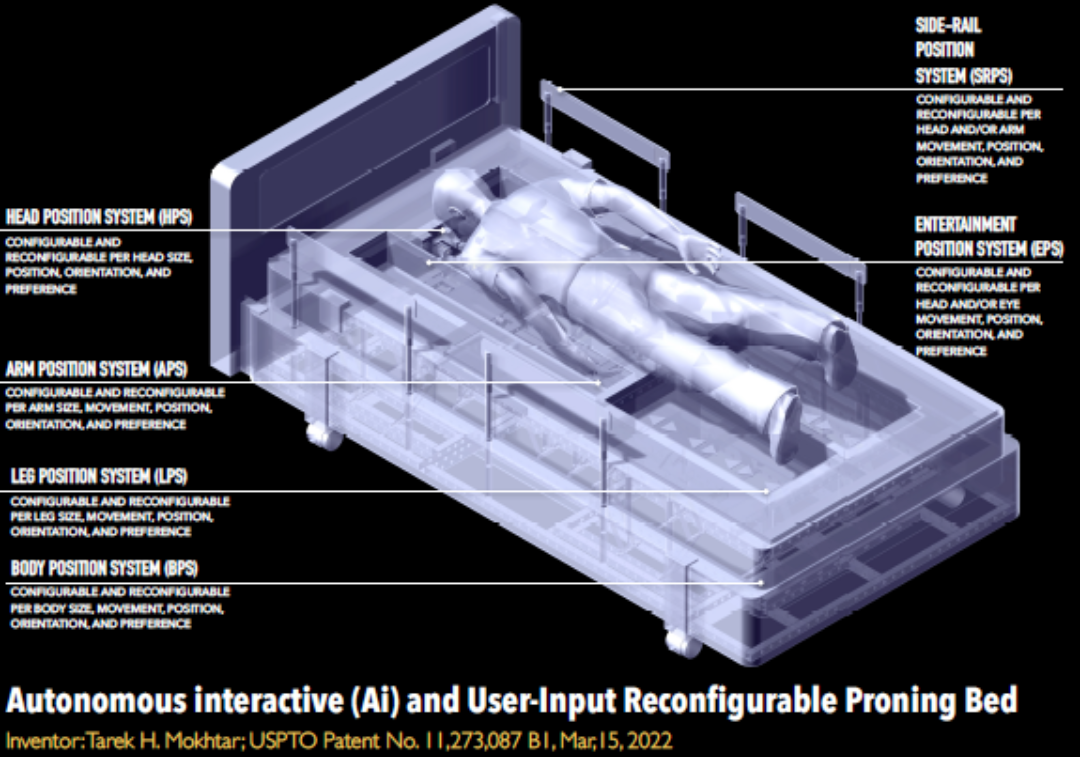
Proning Bed – Patent US11273087B1
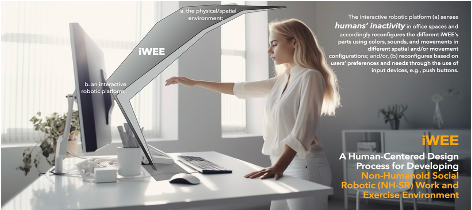
iWEE Prototype
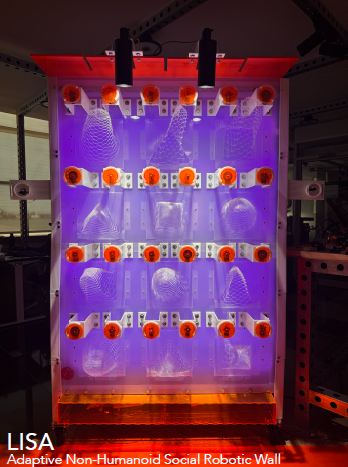
LISA Prototype
Team Members:
- Eng. Qusai Raid Khashman, M.Sc. (Research Assistant)
- Eng. Somiah Medhat Bakr, M.Sc. (Research Assistant)
Center Director:
-
Dr. Tarek H. Mokhtar, Assoc. AIA, RA-EG, Ph.D., M.Sc. (Director)
- e: tmokhtar@alfaisal.edu
- p: 011-215-7798
DaVinciAT Robotics in Architecture Research Center Labs:
- Morph
- Edge
- RoboTek
- iDNA
Morph
MORPH fosters an environment where digital models seamlessly transform into tangible prototypes, empowering designers and researchers to push creative and structural boundaries. Whether pursuing intricate architectural details or experimental design artifacts, Morph Lab serves as an incubator for pioneering technological and aesthetic explorations. MORPH Workshop stands at the forefront of innovation in digital fabrication, featuring advanced machinery including a 5-axis CNC milling station, state-of-the-art SLA multijet 3D printer, and high-precision CO₂ laser cutter. The lab enables meticulous manipulation and creation across both metal and non-metal materials, supporting complex geometries and design explorations unattainable through conventional methods.

Edge
EDGE Studio facilitates interdisciplinary innovation. Researchers leverage this ecosystem to develop adaptive robotic solutions that intuitively engage with human behaviors and spatial dynamics. The studio uniquely bridges physical and digital realms, enabling explorations in smart environmental responsiveness, autonomous system interactions, and the seamless integration of computational intelligence into physical infrastructures—fundamental for the future of socially intelligent spaces.

RoboTek
RoboTek is an advanced robotics fabrication facility, integrating cutting-edge KUKA robotic systems capable of both subtractive manufacturing processes, such as precise milling and carving, and additive methods, including 3D printing with specialized end-effectors. The RoboTek lab provides a dynamic environment for fabricating complex structures with unparalleled accuracy, from intricate art installations to robust architectural components. Researchers and practitioners in RoboTek explore the frontiers of robotic fabrication technologies, pushing the envelope in terms of scalability, precision, and creative versatility. By merging robotics with traditional craftsmanship techniques, RoboTek exemplifies the transformative potential of robotic fabrication in contemporary architecture and design.

iDNA
iDNA Research Lab is dedicated to the convergence of intelligence, design, and artistic expression, focusing on the creation of sophisticated intelligent art and design systems. The lab offers an extensive suite of computational and physical fabrication tools, fostering environments where digital logic meets embodied intelligence. Researchers here explore generative design algorithms, responsive installations, and adaptive interfaces, embedding cognition within artistic and spatial practices. The outcome is an evolving landscape of intelligent artifacts and environments that respond dynamically to user interactions and environmental stimuli. iDNA represents an ecosystem where creativity and artificial intelligence merge, pioneering new possibilities in the integration of intelligent systems into human-centered design and artistic experiences